
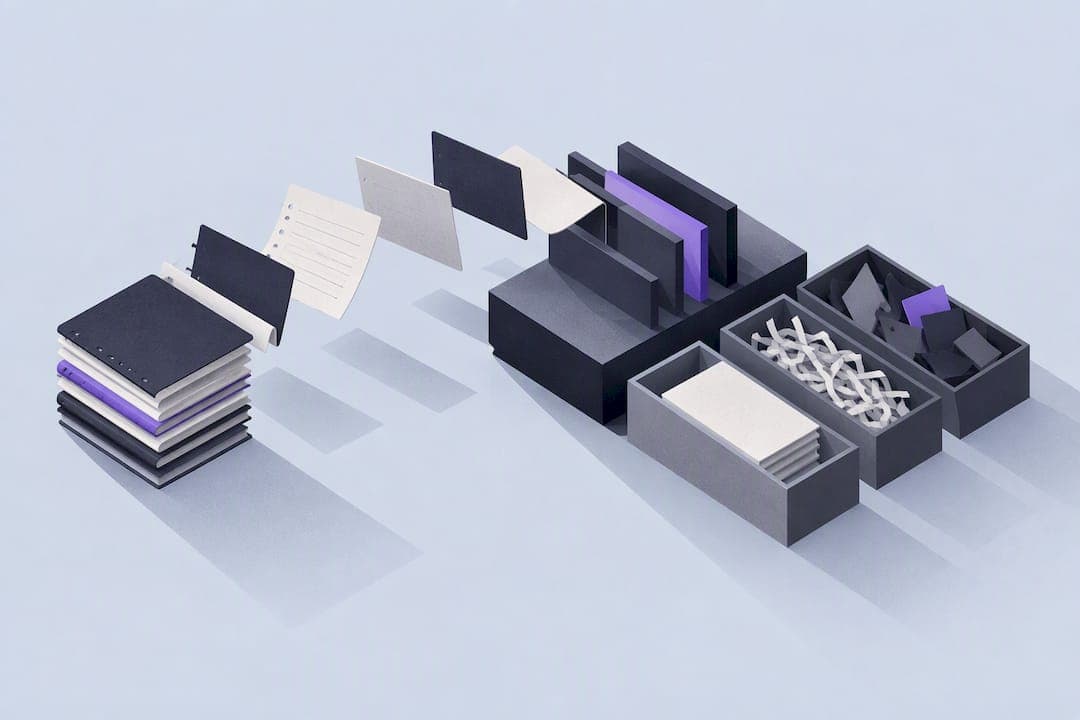
Most notebook paper can be recycled, but only if you strip out the parts that aren't paper and keep the pages clean and dry. The first move is simple: pull the spiral, tear the cover off, or rip the pages loose before anything touches your recycling bin. Skip that step and a whole batch of good paper can get bounced to the landfill.
TL;DR:
- Removing coils, staples, and non-paper materials from notebooks is essential because contamination from plastic, glue, or foil can damage recycling equipment.
- Lightly printed, handwritten pages, and plain uncoated paper are recyclable, while pages with heavy coatings or adhesives should be discarded to avoid contamination.
- Disassembling spiral-bound notebooks by snipping the coil and unwinding it helps preserve usable paper and separates recyclable materials like metal or plastic coils.
- Reusing or donating notebooks with unused pages reduces waste, and buying recycled-content or minimally coated notebooks makes future recycling easier.
- Plain, uncoated paper is compostable, but heavily coated or contaminated pages should always go to landfill if recycling or composting is not possible.
Table of Contents
- What Parts of Notebook Recycling Programs Actually Accept
- How Do You Remove Spirals and Bindings From Notebooks?
- Handling Spiral, Plastic, and Glued Notebooks
- Better Options Than the Recycling Bin: Reuse and Donation
- Can You Compost Notebook Paper Instead?
- Buying and Using Notebooks to Cut Future Waste
- A Simple Habit That Makes Notebook Recycling Painless
- An Eco-Friendly Notebook Option Worth a Look
- Where to Check Local Rules and Technical Guidance
- Sources
- FAQ
What Parts of Notebook Recycling Programs Actually Accept
Paper pages and cardboard covers are fair game for most curbside programs, as long as they're free of plastic, glue, glitter, or heavy laminate coatings. Once you strip those extras off, a notebook behaves like any other sheet of office paper heading to the mill.
Contamination is the real problem, not the paper itself. The EPA's guidance on recovered paper quality is blunt about it: plastic, adhesives, and glass mixed into a paper bale can damage processing equipment and put workers at risk. Adhesives specifically create what the paper industry calls "stickies," a gummy residue that gums up rollers and screens during pulping and reduces the quality of the recycled sheet that comes out the other end.
What tends to pass:
- Loose, uncoated writing paper
- Plain cardstock or cardboard covers
- Lightly printed or handwritten pages
What tends to fail:
- Pages with plastic lamination or heavy foil
- Anything still attached to a metal or plastic spiral
- Paper soaked in glue, wax, or tape residue
Rules shift by city and hauler, so check your local recycling page before you toss a whole bound notebook in the bin. What works in one municipality can jam a sorting line two towns over.
How Do You Remove Spirals and Bindings From Notebooks?
Getting a notebook recycling ready takes about five minutes once you know the trick. Two methods work, and which one you pick depends on how much time you have and how the notebook is built.
- Find the crimped end of the spiral. Every spiral-bound notebook has one end where the coil is bent or crimped to stop it from sliding out.
- Snip that crimp with wire cutters or sturdy pliers. This releases the tension holding the coil in place.
- Unwind the spiral by hand. Work slowly, pulling the coil away from the paper in a rotating motion rather than yanking it straight out, which tears holes through the pages.
- Sort the coil by material. Metal spirals can often go into a scrap metal bin, while plastic coils usually belong in the trash unless your local program specifically accepts that plastic.
- If disassembly isn't practical, tear the pages out instead. This works well for notebooks you've barely used, and it's faster than fighting a stubborn coil.
- Pull staples, tape, and sticky notes off every page you save. A butter knife or the flat edge of scissors helps lift stubborn staples without tearing the paper.
Unwinding the coil tends to preserve more usable paper than ripping pages out, since torn edges can leave scraps too small to bother saving. Either way, don't force it. Aggressive tearing shreds pages into pieces too small for recycling sorters to catch.
Pro Tip: Keep a small bin or bag just for spirals, staples, and tape as you work through a stack of notebooks. Mixing them back in with your paper pile undoes everything you just did.

Handling Spiral, Plastic, and Glued Notebooks
Not every notebook disassembles the same way, and a few common types deserve their own rules:
- Spiral-bound notebooks: Remove the coil if your local program requires loose paper. Metal coils sometimes qualify for scrap metal recycling; plastic coils usually go to the trash unless a special program accepts them.
- Plastic covers: Pull these off and route them to a hard-to-recycle plastics stream if your area has one, or the trash if it doesn't. A few municipalities partner with private drop-off programs, like Hefty ReNew's orange-bag collection, for plastics curbside bins won't take.
- Glued or perfect-bound journals: If the cover won't separate cleanly, tear the pages out instead. Loose paper is what recyclers want anyway.
- Glitter, foil, or laminated pages: Treat these as contamination. They typically don't belong in the paper stream regardless of how much clean paper surrounds them.
When in doubt on any of these, the San Jose Recycles notebook guide makes a fair point: if you genuinely can't remove the non-paper material, throwing the notebook away beats contaminating an entire batch of recyclable paper.
Better Options Than the Recycling Bin: Reuse and Donation
Recycling is the fallback, not the first move. A notebook with half its pages still blank has more life left in it before it needs to go anywhere near a bin.
- Donate unused or lightly used notebooks to schools, shelters, or community centers, but call ahead to confirm they're accepting supplies before you drop off a box.
- Repurpose blank or half-used pages as scratch pads, sketchbooks, or material for craft projects like collage art or seed paper.
- Build precycling habits now: buy notebooks made from recycled-content paper, use both sides of every sheet, and pick bindings that come apart easily when the notebook's finally done.
Small habits like these do more to cut waste over a year than any single recycling trip. Ecolife's guide to notebook recycling frames precycling the same way: the paper you never had to throw out is the paper you never had to worry about.
Can You Compost Notebook Paper Instead?
Plain, uncoated notebook paper is generally compostable, which makes it a real option for anyone with a backyard bin or access to a municipal organics program. Skip composting anything with heavy ink coverage, laminate, or leftover adhesive, since those materials break down poorly and can introduce microplastics into your compost.
- Shred plain pages before adding them to speed up decomposition.
- Check with your hauler before tossing bound paper into an organics cart. Municipal programs vary widely on what they'll take.
- If a notebook is contaminated with plastic or heavy coatings and can't be cleaned up, landfill disposal is the safer last resort. It's better than letting that contamination wreck a batch of recyclable paper for everyone else.
Buying and Using Notebooks to Cut Future Waste
The easiest way to recycle fewer notebooks later is to buy smarter now. Look for notebooks labeled recycled content, with minimal plastic coating and bindings you can actually take apart without a fight. Use both sides of every page, and turn unused sheets into scratch pads instead of grabbing a fresh pad off the shelf. Eco-focused stationery built with sourcing in mind can support those shifting toward lower-waste supplies.

A Simple Habit That Makes Notebook Recycling Painless
Set a quarterly reminder to sort through old notebooks: pull spirals, tear out pages, sort what's trash from what's recyclable. That single habit does more to prevent contaminated paper loads than any last-minute scramble. Small, repeated effort is what makes a local recycling program actually work.
— ADAM
An Eco-Friendly Notebook Option Worth a Look
If you're rethinking how you buy notebooks in the first place, a lower-waste starting point is available instead of another trip through the disassembly steps above. A curated selection leaning on recycled materials means you're buying paper that's already closed part of the loop before it ever reaches your desk.

That matters because the notebooks easiest to recycle later are the ones designed with fewer coatings, simpler bindings, and recycled-content paper from the start, qualities often emphasized in eco-friendly stationery selections. Instead of untangling a plastic-coated spiral notebook next year, you start with something that was never going to be that much trouble. Browse the eco-friendly notebook and stationery selection and pick your next notebook with the next disposal cycle already handled.
Where to Check Local Rules and Technical Guidance
For rules specific to your area, check your city's recycling page directly, since programs vary block by block. The EPA's recovered paper quality standards and AF&PA's industry guidance explain why contamination rules exist in the first place.
Sources
- Recovered Paper Quality | Paper Recycling | US EPA
- Notebooks - San Jose Recycles
- AF&PA’s paperrecycles.org sends right message the right way
- How to Recycle Notebooks - Ecolife
FAQ
Are Notebooks Recyclable?
Yes, most notebook paper is recyclable once you remove spirals, plastic covers, staples, and any glitter or laminated pages. Local rules on bound notebooks vary, so check your municipality's guidance before tossing one in whole.
What Will You Do With Your Old Notebooks?
Start by checking whether the notebook has unused pages worth saving as scratch paper before you recycle anything. If it's fully used, disassemble it: pull the coil, sort metal from plastic, and set the loose paper aside for your recycling bin.
What Are Five Things That Cannot Be Recycled With Notebook Paper?
Metal and plastic spiral coils, plastic covers, glitter or foil-decorated pages, laminated sheets, and pages soaked in tape or glue residue all need to come out before recycling. Mixing these into your paper bin creates the "stickies" and equipment damage the EPA warns against.
What to Do With an Unused Notebook?
Donate it. Schools, shelters, and community centers regularly take gently used or blank notebooks, though it's worth calling ahead to confirm they're accepting supplies that week. If donation isn't an option, keep it around as a scratch pad instead of buying a new one.
How Do I Remove a Spiral Binding Before Recycling?
Locate the crimped end of the coil, snip it with pliers or wire cutters, and unwind the spiral by rotating it away from the pages. Metal coils can sometimes go into scrap metal recycling, while plastic coils typically head to the trash unless your local program says otherwise.